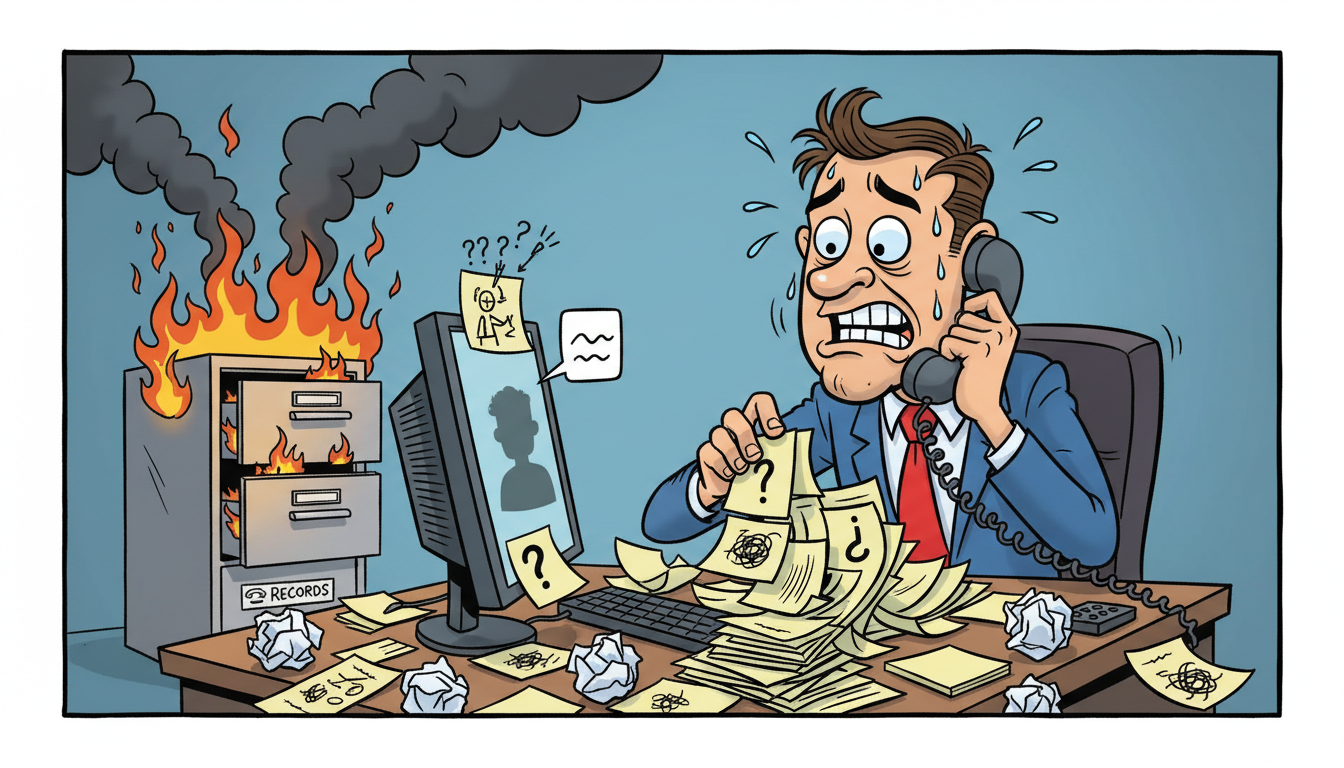
MSP sales reps struggle with objections because they have no searchable record of what was promised on previous calls, cannot recall which technical details mattered to each prospect, and lack access to proven objection-handling patterns from successful deals. Without call transcripts and AI-powered retrieval, every objection feels new and every response is improvised, leading to 40% variance in close rates across the team.
What objections do MSP sales reps face most often in Salt Lake City
Price objections dominate MSP sales conversations in Salt Lake City, particularly when prospects compare flat-rate managed services to their current break-fix IT spending. Prospects in medical, legal, and manufacturing verticals claim they “don’t need that much support” or “only call IT twice a year,” underestimating their actual incident volume.
Scope confusion creates the second most common objection category. Prospects ask whether backup monitoring, security patching, or after-hours support is included in the base MRR, and sales reps who lack documentation of what competitors quoted struggle to position their offering clearly.
Trust and continuity objections surface when prospects have been burned by previous MSPs who over-promised and under-delivered. They ask for references, SLAs, and proof of past performance, but sales reps without access to recorded client success stories resort to generic assurances that fail to overcome skepticism.
Technical capability objections arise when prospects use specialized software or compliance frameworks. A legal firm asks about two-factor authentication for remote access, or a medical practice asks about HIPAA-compliant backup encryption, and the sales rep cannot immediately cite specific implementation examples from similar clients.
Contract length and commitment objections close out the top five. Prospects balk at 36-month agreements or ask for month-to-month terms, and sales reps who cannot explain the business model economics or reference similar clients who started cautiously and expanded struggle to justify the commitment.
Salt Lake City’s competitive MSP market means prospects often have multiple quotes in hand, making differentiation on something other than price critical.
Why do sales reps forget what worked in past objection conversations
Human memory degrades rapidly after sales calls. A rep who handled a pricing objection brilliantly on Monday cannot recall the exact phrasing or sequence of questions by Friday when facing the same objection with a different prospect.
MSPs running lean operations ask technical staff to sell, meaning the same person troubleshooting a server failure at 2 PM is expected to handle a sales objection at 3 PM. Context-switching obliterates retention of successful sales patterns.
Handwritten notes capture intent but lose the precise language that made an objection-handling moment successful. A note reading “explained backup ROI” tells you nothing about whether you led with the ransomware story, the compliance angle, or the client testimonial.
Sales reps who successfully overcome an objection once cannot teach that pattern to others because they lack a transcript of what they actually said. The knowledge remains locked in one person’s experience rather than becoming team property.
CRM systems record that an objection occurred but not the conversational flow that resolved it. A note stating “addressed price concern, moved to proposal stage” provides zero coaching value for a new hire facing the same objection tomorrow.
Sales reps forget 80% of objection-handling details within 48 hours without a searchable transcript of the original conversation.
Without recorded evidence, every objection feels like the first time, and improvement happens through trial and error rather than pattern recognition.
How does lack of call documentation hurt objection handling
Disputed promises destroy credibility during objection conversations. When a prospect claims “your colleague said backup was included” and the current sales rep has no record of that call, the objection escalates from pricing to trust.
Sales reps cannot reference specific past commitments when a prospect raises a concern. If a medical practice asks about after-hours support and the rep cannot immediately confirm what was discussed in the initial discovery call, the prospect assumes incompetence or dishonesty.
Training new sales reps becomes expensive trial and error. Without recordings of successful objection-handling calls, new hires learn by losing deals rather than studying proven patterns from top performers.
Managers cannot diagnose why one rep closes 40% of proposals while another closes 15%. Without call transcripts, the coaching conversation devolves into subjective opinions about “confidence” or “rapport” rather than specific behavioral differences in objection handling.
Legal and compliance objections require precise technical answers. When a legal firm asks about encryption standards for client data and the sales rep cannot reference the exact specifications discussed with similar clients, the deal stalls while the rep “checks with the technical team.”
Follow-up objections multiply when the sales rep forgets what the prospect already accepted. Revisiting a settled concern signals disorganization and gives the prospect a reason to reconsider the entire relationship.
Documentation gaps turn every objection into a negotiation rather than a clarification.
What role does AI play in helping reps handle objections better
AI transcription captures every word of every sales call, creating a searchable database of objection-handling patterns. A sales rep facing a price objection can query past calls where that objection was successfully overcome and review the exact phrasing that worked.
Real-time AI coaching detects when a prospect raises an objection and surfaces relevant talking points during the call. When a prospect says “that’s more than we’re paying now,” the AI displays the ROI calculator or the ransomware cost comparison without the rep needing to remember where those assets live.
AI-powered retrieval answers specific questions about past client conversations. A rep can ask “what did we promise the dental practice about backup frequency” and receive a timestamped transcript excerpt rather than guessing or digging through email.
Sentiment analysis flags when an objection is hardening into a deal-killer versus when it is a routine clarification question. AI detects tonal shifts and conversational patterns that indicate a prospect is genuinely concerned versus simply negotiating, allowing the rep to adjust their response intensity.
Automated objection categorization builds a knowledge base over time. The system learns that “too expensive” objections in the legal vertical respond well to compliance cost avoidance stories, while manufacturing prospects respond better to uptime ROI calculations.
AI eliminates the need for reps to remember which technical details matter to each prospect. The system retrieves the discovery call transcript and highlights that this particular prospect cared about multi-site backup orchestration, not generic disaster recovery.
MADDOX CRM combines call recording, full transcription, and AI-powered retrieval with 58 distinct AI features that turn every conversation into coaching material and every objection into a learning opportunity.
How do MSPs in Salt Lake City currently train reps to handle objections
Most Salt Lake City MSPs rely on shadowing, where a new sales rep listens to live calls from a senior rep and takes notes. This method captures only the calls that happen during the training window and provides no ability to replay or analyze successful patterns.
Role-playing sessions simulate common objections, but without real prospect language and context, the practice feels artificial. A rep who smoothly handles a mock price objection often freezes when a real prospect phrases the same concern differently.
Written objection-handling scripts circulate through email or shared drives, but these scripts rarely match the conversational flow of actual sales calls. Reps who read from scripts sound robotic, and prospects disengage.
Post-call debriefs between manager and rep rely on the rep’s memory of what was said. The manager hears a filtered, incomplete version of the conversation and coaches based on partial information, missing the actual inflection points where the objection could have been handled differently.
Some MSPs record calls but store them as audio files with no transcription or search capability. Finding a specific objection-handling moment requires listening to hours of recordings, so the recordings go unused and training defaults back to anecdotal advice.
Peer learning happens informally when reps share stories about difficult calls, but without evidence, the stories morph into legend rather than reproducible technique. “I told them about the ransomware attack at the law firm” becomes the advice, but the new rep has no access to how that story was actually delivered.
Training remains expensive, slow, and inconsistent without a system that captures and indexes every objection-handling conversation.
What common objection-handling mistakes cost MSPs the most revenue
- Answering the wrong objection. The prospect says “that’s expensive” but actually means “I don’t understand what I’m getting,” and the rep launches into a discount discussion instead of clarifying scope. Without transcripts showing which clarification questions closed past deals, reps guess at the real concern.
- Forgetting what the prospect already accepted. A rep re-explains the three-year contract term the prospect agreed to in the discovery call, signaling disorganization. The prospect interprets this as evidence the MSP won’t remember their specific requirements during service delivery.
- Making promises outside the service catalog. A technical person selling promises 24/7 phone support to close a deal, not realizing the MSP only staffs after-hours for critical alerts. The client churns six months later when they discover the gap between promise and delivery.
- Failing to reference similar client success. When a legal firm objects that “law firms have unique compliance needs,” the rep cannot immediately cite the three other legal clients already using the service because that information lives in someone else’s memory or buried in the PSA.
- Losing momentum during technical objections. A prospect asks about backup encryption standards and the rep says “I’ll check with our engineer and get back to you.” The deal cools during the delay, and the prospect accepts a competitor’s proposal that arrived first.
- Treating every price objection identically. A manufacturing prospect objecting to price needs uptime ROI data, while a medical practice needs compliance cost avoidance numbers. Reps without access to vertical-specific objection patterns default to generic responses that fail to resonate.
Each mistake is preventable with documented evidence of what actually works, but most MSPs operate on institutional memory that walks out the door when an employee leaves.
What happens when sales reps cannot prove what was discussed in earlier calls
Scope creep begins at the sales stage when a prospect claims “you said that was included” and the rep has no transcript to verify. The MSP either absorbs the cost of services never quoted or damages the relationship by insisting the prospect is mistaken.
Deals stall when the decision-maker asks for a recap of what was discussed with their IT manager three weeks ago. The sales rep who cannot provide specifics looks unprepared, and the prospect questions whether the MSP can manage complex client relationships.
Objections resurface because the rep forgets which concerns were already addressed. A prospect who accepted the three-year contract term in the discovery call raises the objection again in the proposal review, and the rep treats it as new rather than referencing the earlier agreement.
Legal disputes arise when a client claims a service was promised during the sales process but never delivered. Without a recording, the MSP cannot defend its position, and the client either wins the dispute or churns with a negative review.
Handoff failures multiply when a sales rep closes a deal and passes the account to a service delivery team with incomplete notes. The delivery team cannot fulfill expectations they don’t know exist, and the client experiences a gap between what was sold and what is delivered.
Competitive disadvantage grows when prospects compare the MSP to competitors who do document their conversations. A competitor who can email a transcript of the discovery call demonstrating they understood the prospect’s priorities wins the deal.
Proof matters more than memory in objection handling, and MSPs without documentation lose deals they should have won.
How does MADDOX CRM solve objection-handling problems for MSPs
MADDOX CRM records every sales call and meeting word for word, creating a permanent, searchable record of every objection and how it was handled. Sales reps can query past calls using natural language – “show me how we handled price objections with legal firms” – and receive timestamped transcript excerpts from successful deals.
The AI coaching system listens to live calls and surfaces relevant talking points when it detects an objection. When a prospect says “we’re happy with our current IT guy,” the system displays the competitive differentiation points and client testimonials specific to that vertical without the rep needing to search.
Integration with ConnectWise and Autotask means every recorded conversation links directly to the client or prospect record in the PSA. Reps see full conversation history alongside tickets, projects, and billing data, eliminating the context-switching that causes objection-handling failures.
The Ask Maddox feature allows reps to ask specific questions about past conversations. “What did the prospect say about their current backup solution” returns the exact quote from the discovery call, allowing the rep to tailor their objection response to the prospect’s actual concerns rather than guessing.
Sales managers gain visibility into objection-handling patterns across the team. The system identifies which reps successfully overcome price objections and which reps lose deals at that stage, enabling targeted coaching based on evidence rather than intuition.
New hire training accelerates because every successful objection-handling call becomes training material. A new rep can listen to the top performer’s last ten price objection conversations and study the exact language, sequencing, and tone that closed deals.
Utah’s one-party consent law for call recording means Salt Lake City MSPs can deploy MADDOX CRM without requiring prospect consent, though best practice is to notify prospects that calls are recorded for quality and training purposes.
MADDOX CRM pricing depends on your existing PSA integration and team size. The system is built for MSPs who need more than a generic CRM – it understands technical terminology, integrates with tools you already use, and turns every conversation into accountability and coaching material.
For MSPs stuck at the ceiling where technical staff must also sell, MADDOX CRM provides the objection-handling support that turns inconsistent closers into reliable revenue generators. Every call becomes evidence, every objection becomes a learning opportunity, and every promise becomes documented proof.
Frequently asked questions
Can MADDOX CRM transcribe technical MSP terminology accurately
Yes, MADDOX CRM transcribes technical MSP terminology including VLAN configuration, Active Directory, backup retention policies, and compliance frameworks accurately because the transcription models are grounded on IT service vocabulary. The system learns from your specific usage patterns over time, improving accuracy on acronyms and vendor names unique to your MSP’s stack and client base.
How does MADDOX CRM handle two-party consent states for call recording
MADDOX CRM provides configurable consent workflows that play disclosure messages at call start and log consent acceptance for each participant. Utah is a one-party consent state, so Salt Lake City MSPs can record without prospect consent, but the system supports stricter compliance requirements for MSPs serving clients in two-party consent states or operating across multiple jurisdictions with varying regulations.
What happens to recorded calls if I stop using MADDOX CRM
MADDOX CRM provides full data export in standard formats including transcript JSON, audio files, and CRM records upon request, ensuring you retain access to all recorded client conversations and commitments even if you discontinue the service. Tenant isolation architecture means your data is never commingled with other customers, and export requests are fulfilled within 48 hours of account closure.
How long does it take to train MSP sales reps on MADDOX CRM
MSP sales reps typically achieve functional competency with MADDOX CRM within one hour because the interface prioritizes simplicity and the AI handles complexity behind the scenes. Core functions – recording calls, searching transcripts, and retrieving past conversation context – require minimal training, while advanced features like custom AI coaching prompts and objection pattern analysis can be learned progressively as reps gain confidence with the system.
Does MADDOX CRM integrate with quoting tools MSPs already use
Yes, MADDOX CRM integrates with ConnectWise Manage, Autotask, and QuickBooks, syncing client data, opportunity stages, and proposal status bidirectionally. The quotes and proposals module allows sales reps to generate quotes directly from conversation transcripts, pulling pricing from your PSA and automatically populating scope based on what was discussed and documented during discovery calls, eliminating manual data entry and scope discrepancies.
Can MADDOX CRM detect when a sales rep is making a promise the MSP cannot deliver
MADDOX CRM’s live coaching system can flag specific phrases or commitments based on rules you configure, alerting the sales rep during the call when they approach a boundary. For example, if a rep begins discussing 24-7 phone support and your SLA only covers business hours, the system can display a warning. However, the AI does not independently judge deliverability – you define the rules and thresholds based on your actual service catalog and capacity.