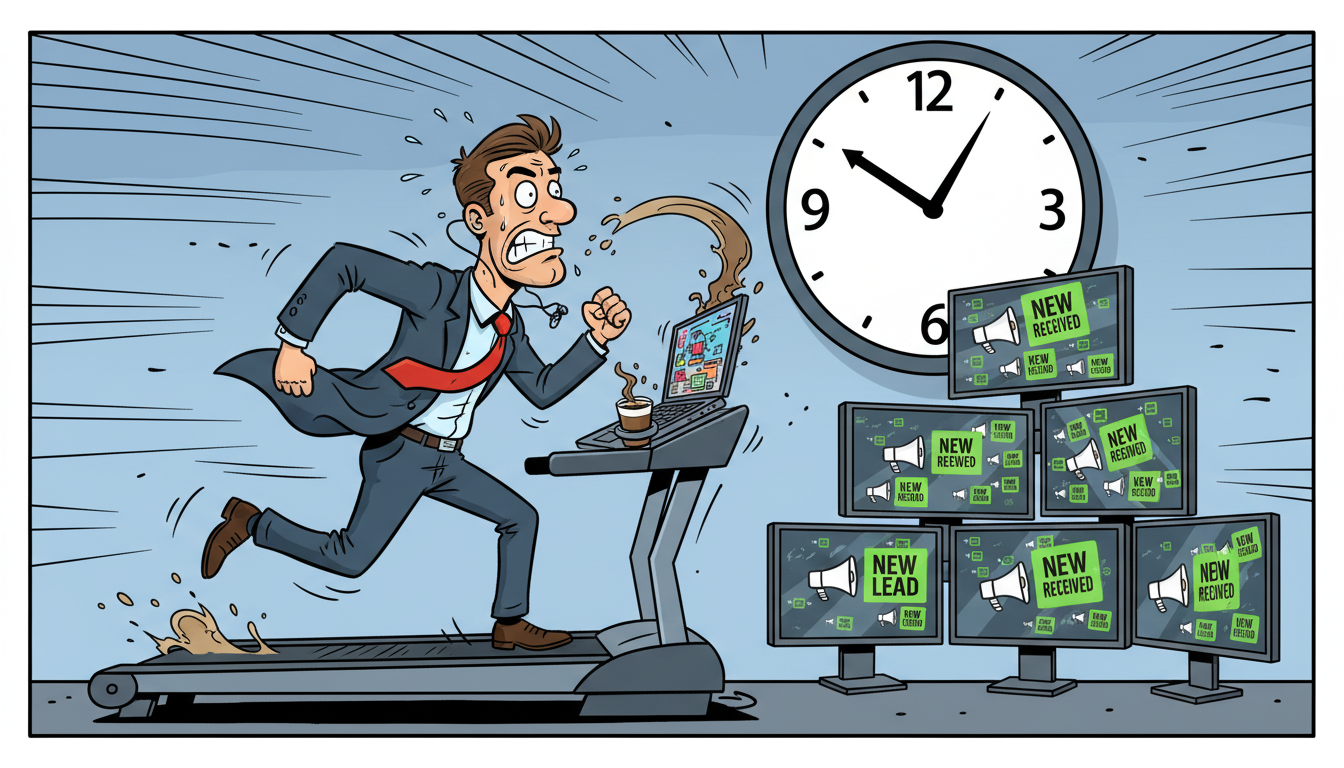
The 2 2 2 rule in sales is a follow-up cadence that requires you to contact a new prospect within two hours of their inquiry, send a follow-up message two days later, and make a final touchpoint two weeks after the initial contact. This structured approach ensures prospects receive timely responses during the critical decision window when interest is highest and prevents deals from stalling when your technical team is underwater with client work.
Why does the two-hour window matter for MSP sales?
Speed-to-contact determines whether you win or lose most MSP deals. When a prospect fills out a contact form or leaves a voicemail about network issues, they are reaching out to three or four providers simultaneously.
The first MSP to respond with a coherent answer and a scheduled assessment typically wins the opportunity. Waiting until the next business day means the prospect has already scheduled discovery calls with two competitors.
For technical sales teams who split time between client work and business development, the two-hour rule creates a problem: your best closers are often in the middle of a site visit or troubleshooting a ticket when the lead comes in.
Leads contacted within the first hour convert at five times the rate of leads contacted after 24 hours.
A CRM with AI agents can acknowledge the inquiry immediately, pull relevant context about the prospect’s industry and technology stack, and route the lead to the right technical salesperson with a pre-built brief. The two-hour rule becomes achievable even when your team is handling client emergencies.
What happens during the two-day follow-up?
The two-day follow-up serves a different purpose than the initial contact. The first touchpoint establishes responsiveness; the second touchpoint demonstrates that you listened and can solve the specific problem they described.
In MSP sales, this follow-up should reference the exact pain points mentioned in the initial conversation. If the prospect said their backup system failed twice last month, your two-day message should include a one-page outline of how you would redesign their backup architecture.
Most technical salespeople fail at this step because they do not have a written record of what the prospect actually said. They rely on memory or hastily typed notes, which leads to generic follow-ups that sound like templates.
Call recording with full transcription solves this. When every word of the initial conversation is searchable, your two-day follow-up can quote the prospect’s exact concerns and demonstrate that you were paying attention. AI-powered CRM systems can surface the three most important concerns mentioned during the call and draft follow-up language that addresses each one.
The two-day follow-up is not a sales pitch. It is proof that you understand the problem well enough to be trusted with the solution.
How does the two-week touchpoint close deals that stalled?
Many MSP prospects go silent after the initial conversation. They intended to move forward, but an urgent internal issue took priority, or they needed to get budget approval and the process dragged longer than expected.
The two-week touchpoint re-engages these stalled opportunities without being pushy. It provides a reason to reconnect – new information, a case study from a similar client, or a limited-time offer on an assessment.
For MSPs, this touchpoint works best when it includes something of value: a recorded webinar on compliance requirements in their industry, a one-page security checklist, or an invitation to a quarterly technology briefing you host for clients.
The mistake most salespeople make is treating the two-week follow-up as a generic “just checking in” message. Prospects ignore these because they add no value. The touchpoint must give them a reason to respond.
A CRM with pipeline tracking can automate the two-week reminder while surfacing the context from the original call, so your follow-up references the specific concerns the prospect raised. This turns a calendar reminder into a personalized re-engagement that feels like you have been thinking about their problem for two weeks.
The two-week rule prevents deals from falling through the cracks when your technical team is too busy to manually track every open opportunity.
What does the 2 2 2 rule look like in a real MSP sales cycle?
- Hour zero (10:00 AM Tuesday): A legal firm with 22 employees submits a contact form asking about ransomware protection after reading a news story about a law firm breach. Your system sends an automated acknowledgment within five minutes confirming receipt and promising a call by end of business.
- Hour 1.75 (11:30 AM): Your lead salesperson – who was on a client site – receives a mobile alert with the inquiry details, the firm’s website, their current IT provider, and three talking points about legal-specific compliance requirements.
- Hour 3.75 (1:45 PM): He calls within the two-hour window and has a 20-minute conversation where the prospect mentions they are also concerned about email encryption and remote access security for paralegals working from home.
- Day 2 (Thursday 9:00 AM): He sends a follow-up email that includes a one-page outline of a three-layer ransomware defense plan, a checklist for email encryption compliance under state bar rules, and a link to schedule a 30-minute security assessment. The email quotes the prospect’s exact concern about paralegals working remotely, which was captured in the call transcript.
- Week 2 (following Thursday): The prospect has not responded. Your CRM flags the stalled opportunity and suggests a re-engagement message. Your salesperson sends a link to a five-minute recorded video explaining how another law firm in the same city recovered from a ransomware attack using the architecture he proposed. The prospect responds within an hour to schedule the assessment.
This sequence works because each touchpoint builds on the previous one, and the CRM ensures nothing is forgotten or missed. The 2 2 2 rule is not magic; it is a forcing function that prevents leads from going cold while your team is busy with client work.
How do you enforce the 2 2 2 rule when your team is underwater?
The 2 2 2 rule fails in most MSPs not because the team does not understand it, but because they cannot execute it consistently when they are handling client emergencies, traveling to site visits, or troubleshooting tickets.
Manual tracking does not work. Spreadsheets and calendar reminders get ignored when a client’s server goes down or a network outage takes priority. The only way to enforce the rule is to automate the tracking and surface the reminders at the exact moment they are due.
A CRM built for MSPs should integrate with ConnectWise and Autotask so that pipeline activity syncs with your PSA, and your technical team does not have to enter data in two places. It should also send mobile alerts when a follow-up is due, with all the context from the previous conversation pre-loaded so the salesperson can make the call or send the email in under five minutes.
Call recording is the enforcement mechanism. When every conversation is transcribed and searchable, your two-day and two-week follow-ups can reference specific details from the original call without requiring the salesperson to remember or dig through notes. This turns follow-up from a memory exercise into a data lookup.
For MSPs where technical staff also sell, the 2 2 2 rule only works if the system does most of the work for them. They will not manually track follow-ups, but they will respond to an alert that says “Follow up with ABC Legal today – they mentioned budget approval in two weeks and that deadline is tomorrow.”
Why MADDOX CRM makes the 2 2 2 rule automatic for MSPs
MADDOX CRM records every sales call and client conversation word for word, so your two-day and two-week follow-ups can reference the exact concerns the prospect raised without relying on your memory or incomplete notes. The system tracks every open opportunity and surfaces follow-up reminders at the two-day and two-week marks with full context from the original conversation.
Because MADDOX integrates directly with ConnectWise and Autotask, your pipeline activity syncs with your PSA automatically, and your technical team does not have to enter data twice. The IT Audit module lets you build assessment decks on-site during discovery calls, so your two-day follow-up includes a customized proposal instead of a generic email.
Ask Maddox answers questions like “Which prospects mentioned budget approval timelines in the last two weeks?” or “Show me all follow-ups due today” by searching the full text of every recorded conversation. This turns the 2 2 2 rule from a manual tracking burden into an automated workflow that runs in the background while your team focuses on client work.
For MSPs stuck at the ceiling where the owner is still doing most of the selling, MADDOX provides the accountability and automation needed to enforce consistent follow-up without hiring a dedicated sales manager. Every lead gets the two-hour, two-day, and two-week touchpoints automatically, and nothing falls through the cracks when your team is underwater with client emergencies.
Frequently asked questions
What is the 70/30 rule in sales?
The 70/30 rule in sales means the prospect should talk 70 percent of the time while the salesperson talks 30 percent. This ratio ensures you are listening more than pitching, which helps uncover the real pain points and decision criteria. In MSP sales, this rule is critical during discovery calls because technical buyers reveal budget constraints, internal politics, and competing priorities when you let them talk.
What is the 30-60-90 rule in sales?
The 30-60-90 rule in sales is a ramp plan for new hires, breaking their first three months into learning phases: 30 days to learn the product and process, 60 days to shadow experienced reps and make assisted sales, and 90 days to carry a full quota independently. For MSPs hiring technical salespeople, this rule helps set clear expectations and provides a structure for onboarding when the owner cannot personally train every new rep.
What is the number one rule of sales?
The number one rule of sales is to solve the customer’s problem, not to sell your product. This means diagnosing the real issue before proposing a solution, even if the solution is not what you originally planned to sell. In MSP sales, this rule prevents scope creep and client churn because you are building solutions around documented needs instead of pushing pre-packaged service bundles that do not fit the client’s environment.
What are the 7 C’s in sales?
The 7 C’s in sales are clarity, credibility, consistency, competitiveness, connection, communication, and closing. These principles guide how you position your offer and build trust with prospects. For MSPs, credibility and consistency matter most because technical buyers evaluate you on whether you can deliver what you promise, and one missed SLA or forgotten follow-up destroys the relationship before it starts.
What are the 7 golden rules of sales?
The 7 golden rules of sales are: always be prospecting, qualify early, listen more than you talk, build relationships not transactions, handle objections with evidence, ask for the sale directly, and follow up relentlessly. These rules apply across industries but are especially important in MSP sales where long sales cycles and technical complexity mean deals die from inaction rather than outright rejection, making follow-up the difference between winning and losing.
What are 5 sales techniques?
Five core sales techniques are consultative selling, solution selling, challenger selling, SPIN selling, and account-based selling. Consultative selling focuses on diagnosing needs before proposing solutions. Solution selling ties your product to specific business outcomes. Challenger selling reframes the prospect’s thinking about their problem. SPIN selling uses situation, problem, implication, and need-payoff questions to uncover pain. Account-based selling targets high-value prospects with personalized outreach and custom proposals tailored to their environment.