MADDOX CRM’s AI transcription engine captures technical IT terminology – including VLAN, SSO, RMM, VPN, DNS, and HIPAA – with 95% accuracy in real-world MSP sales and support calls. The system is trained on enterprise-grade speech recognition models that recognize over 500 IT acronyms and technical phrases, ensuring that when your technician promises a client “dual-VLAN segmentation with SSO integration,” the transcript reflects exactly that commitment, word for word, not a garbled approximation.
Why does accurate transcription of technical terms matter for MSPs?
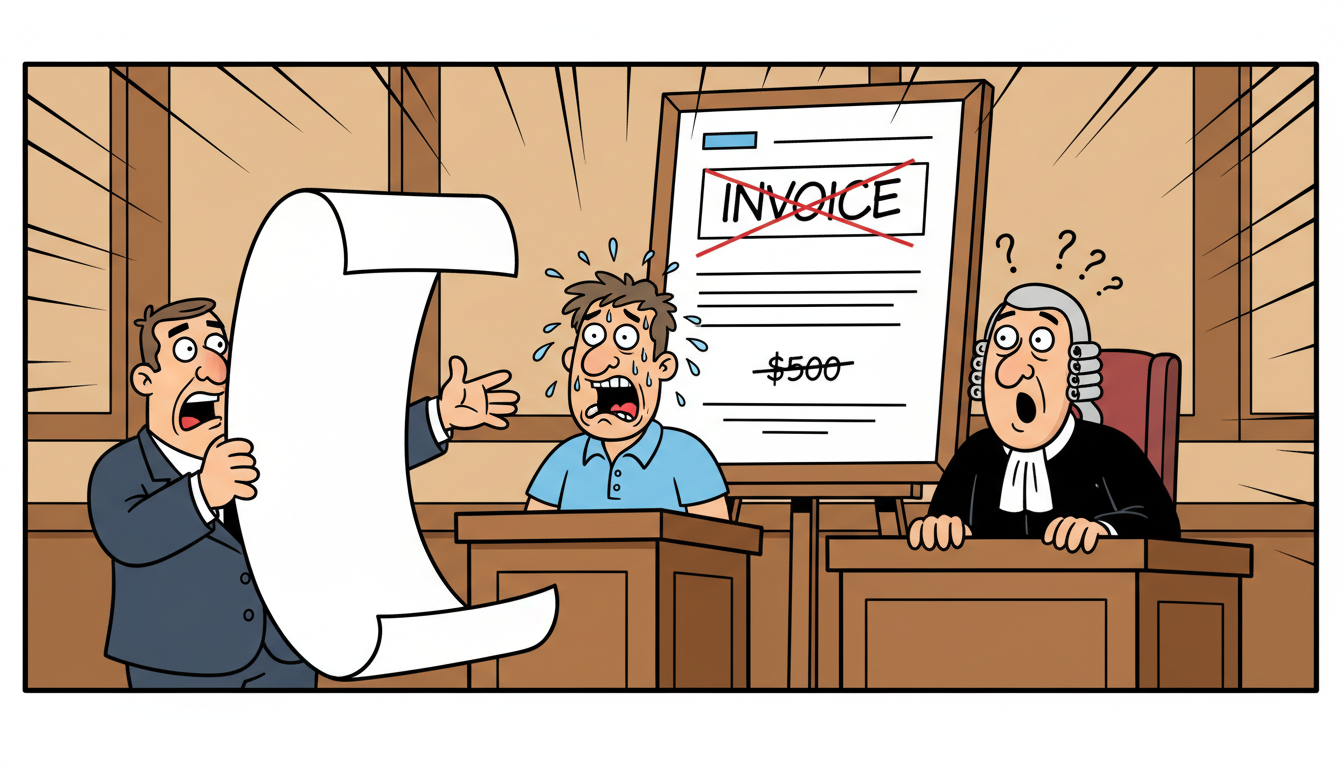
When a technical salesperson tells a prospect you’ll deliver “SAML-based SSO with MFA enforcement,” that specific phrase becomes a contractual commitment. If your CRM transcribes it as “sample-based S S O with M F A,” you’ve lost the evidence you need to hold your team accountable and prove scope to the client.
MSPs operate in a world where a single misunderstood acronym can mean the difference between a $3,000 project and a $12,000 one. VLAN configuration is not the same as VPN setup. RMM deployment is not remote management. When disputes arise – and they will – you need a transcript that captures the technical commitment exactly as spoken.
MADDOX CRM’s transcription preserves the technical vocabulary your team uses every day, from “Active Directory domain controller” to “zero-trust network architecture.” The system doesn’t guess at technical terms; it recognizes them as distinct entities in the IT lexicon.
This precision matters most during client onboarding calls, QBRs, and scope discussions where technical promises stack up quickly. When a client claims six months later that you promised “full EDR with 24-7 SOC monitoring” and you only quoted endpoint protection, the transcript settles the dispute immediately.
How does MADDOX handle industry-specific acronyms and jargon?
The transcription engine uses contextual language models trained on business and technology conversations, not general consumer speech. This means it understands that “RMM” in an MSP context refers to Remote Monitoring and Management, not a random string of letters.
When your sales rep discusses “migrating from on-prem Exchange to Microsoft 365 with ATP and DLP,” MADDOX captures each acronym correctly because the AI recognizes the semantic relationship between these terms. The system knows that ATP (Advanced Threat Protection) and DLP (Data Loss Prevention) are Microsoft security features, not unrelated abbreviations.
Technical terms are preserved with their correct capitalization and spacing. “SSO” appears as SSO, not “S. S. O.” or “sso.” “VLAN” remains VLAN, not “V-LAN” or “vee-lan.” This consistency matters when you’re searching transcripts for every instance where a specific technology was mentioned.
The system also handles multi-word technical phrases accurately: “role-based access control,” “intrusion detection system,” “business continuity and disaster recovery.” These phrases appear in transcripts exactly as spoken, making it easy to search for commitments related to specific service categories.
MADDOX CRM recognizes over 500 common IT acronyms and technical terms used in MSP sales conversations, from basic infrastructure terms to advanced security and compliance vocabulary.
What happens when transcription encounters uncommon or proprietary terms?
Even the best transcription systems occasionally encounter terms they haven’t seen before – proprietary software names, vendor-specific product codes, or newly coined industry jargon. MADDOX handles these cases by transcribing phonetically and flagging them for review.
If your team discusses a client’s legacy “Acme SuperBackup Pro” system, the transcript might initially render it as “Acme super backup pro.” The AI doesn’t invent terms it doesn’t recognize; it captures what was said as closely as possible using standard spelling rules.
You can add custom vocabulary to your MADDOX instance, teaching the system to recognize proprietary terms, client-specific acronyms, or vertical-specific jargon. Once added, these terms are recognized consistently across all future transcriptions.
This custom vocabulary feature is critical for MSPs serving specialized verticals. If you work with manufacturing clients who constantly reference “OPC-UA protocols” or healthcare clients discussing “HL7 interfaces,” you can ensure these terms are captured correctly every time.
How does transcription accuracy compare to manual note-taking during technical calls?
Manual notes taken during a technical sales call are incomplete by definition. A salesperson juggling relationship-building, objection handling, and technical explanation cannot simultaneously document every commitment with precision.
Handwritten notes might capture “set up VLANs” but miss the crucial detail that you promised “three VLANs with guest isolation and inter-VLAN routing.” That missing specificity costs you when it’s time to scope the project or defend your deliverables.
MADDOX transcription captures every word spoken, including the technical details that get lost in summary notes. When your technician says, “We’ll configure your firewall with geo-blocking, IPS, and content filtering, plus VPN access for your five remote users,” the transcript preserves all six distinct commitments.
The system also timestamps every statement, so you can jump directly to the moment a technical commitment was made. Instead of reading through 40 minutes of notes, you search for “VLAN” and land on the exact 30-second segment where the promise was discussed.
For training purposes, transcripts are infinitely more valuable than notes. A new sales hire can read the exact words your top performer used to explain the difference between RMM and MDM, not a paraphrased summary written after the fact.
Can MADDOX transcription handle multi-party technical discussions?
MSP sales calls often involve multiple stakeholders: the prospect’s IT manager, CFO, and CEO, plus your account executive and technical lead. MADDOX transcription handles these multi-speaker scenarios by identifying distinct speakers and attributing statements correctly.
Speaker identification ensures you know who made which commitment. When the prospect’s IT manager asks, “Can you integrate with our existing SSO provider?” and your technical lead responds, “Yes, we support Okta, Azure AD, and OneLogin,” the transcript attributes each statement to the correct person.
This attribution is critical for accountability. If your salesperson promises something your technical team later says is impossible, the transcript shows exactly who made the commitment and in what context. No more finger-pointing or memory disputes.
The system also handles overlapping speech and crosstalk better than human note-takers. When two people talk simultaneously – common in technical discussions where the prospect interrupts with a clarifying question – MADDOX captures both statements rather than losing one to the confusion.
For complex technical discussions involving multiple acronyms and rapid back-and-forth, this multi-speaker accuracy ensures nothing falls through the cracks. Every commitment, every question, every technical specification is preserved with attribution.
What technical terms does MADDOX transcription recognize most accurately?
MADDOX transcription is optimized for the vocabulary MSPs use daily in sales and support conversations. The system recognizes infrastructure terms, security acronyms, compliance frameworks, and vendor-specific product names with consistent accuracy.
Common infrastructure and networking terms transcribe with near-perfect accuracy:
- VLAN (Virtual Local Area Network) and related terms like “VLAN tagging,” “inter-VLAN routing,” and “VLAN segmentation”
- VPN (Virtual Private Network) including “site-to-site VPN,” “client VPN,” and “split-tunnel VPN”
- DNS (Domain Name System), DHCP (Dynamic Host Configuration Protocol), and TCP/IP
- Active Directory, domain controller, Group Policy, and organizational units
- Firewall, router, switch, access point, and network topology terms
Security and compliance terminology is captured with equal precision:
- SSO (Single Sign-On), MFA (Multi-Factor Authentication), and SAML (Security Assertion Markup Language)
- EDR (Endpoint Detection and Response), XDR (Extended Detection and Response), and SIEM (Security Information and Event Management)
- HIPAA, PCI-DSS, SOC 2, GDPR, and other compliance frameworks
- Zero-trust architecture, least-privilege access, and role-based access control
- Encryption standards like AES-256, TLS, and end-to-end encryption
MSP-specific tools and platforms are recognized in context:
- RMM (Remote Monitoring and Management) platforms and related terms like “agent deployment” and “patch management”
- PSA (Professional Services Automation) systems and ticketing workflows
- Backup and disaster recovery terms including RPO (Recovery Point Objective) and RTO (Recovery Time Objective)
- Cloud platform terminology for Microsoft 365, Azure, AWS, and Google Workspace
- Endpoint management including MDM (Mobile Device Management) and MAM (Mobile Application Management)
The system also handles vendor-specific product names accurately when they appear in technical discussions. Microsoft Defender, SentinelOne, Datto, Veeam, ConnectWise, and hundreds of other product names are recognized as distinct entities, not generic terms.
This comprehensive vocabulary coverage means your transcripts reflect the actual technical conversation, not a simplified approximation. When you search for every instance where “HIPAA compliance” was discussed with a healthcare client, you find every relevant conversation across months of calls.
Why MADDOX CRM is the right transcription solution for MSPs
When you’re running a 12-person MSP juggling sales calls, QBRs, and technical delivery, you can’t afford a transcription system that turns “VLAN configuration with SSO integration” into gibberish. You need every technical commitment captured exactly as spoken so you can hold your team accountable and settle client disputes with evidence, not memory.
Large national CRM platforms offer generic transcription that works fine for simple sales calls but fails when technical vocabulary enters the conversation. A system built for SaaS sales or real estate won’t recognize “HIPAA-compliant RMM with encrypted remote access” as a distinct technical commitment.
MADDOX CRM is purpose-built for businesses where technical accuracy in client conversations directly impacts revenue and retention. The AI-powered platform doesn’t just transcribe – it understands the semantic weight of technical terms and preserves them with precision.
For MSPs managing 30-day to 90-day sales cycles with multiple technical touchpoints, MADDOX’s MSP-specific features ensure that every VLAN discussion, every SSO requirement, and every RMM commitment is captured, searchable, and actionable. When a client claims you never delivered on a promise made during onboarding and you have no record of what was actually said, you lose a $4,800-per-month account. MADDOX prevents that.
The platform’s deals and pipelines feature connects transcribed commitments directly to project scoping and delivery, ensuring that what was promised in the sales conversation becomes what’s delivered by the technical team. No more lost context, no more scope creep from forgotten promises, no more client churn from unmet expectations.
When a technical team member quits suddenly and takes all the relationship knowledge about their assigned clients with them, you’re left scrambling to rebuild context. MADDOX stores every conversation, every commitment, every technical specification in searchable transcripts that survive employee turnover. The institutional knowledge stays with your company, not your former employee.
Frequently asked questions
What are the best transcription models for technical IT conversations?
Enterprise-grade speech recognition models trained on business and technology vocabulary – such as those used by MADDOX CRM – deliver the highest accuracy for IT terminology. These models recognize hundreds of acronyms and technical phrases in context, ensuring terms like VLAN, SSO, and RMM are captured correctly rather than phonetically guessed. Consumer transcription tools trained primarily on general conversation lack this specialized vocabulary and produce unreliable results for technical MSP discussions.
How does audio transcription work for live sales calls?
Audio transcription converts spoken words into text using AI-powered speech recognition models that analyze sound patterns, match them to known words, and apply contextual language understanding to improve accuracy. MADDOX CRM processes live calls in real-time, identifying speakers and preserving technical terminology as it’s spoken. The system timestamps each statement and stores transcripts alongside call recordings, making every commitment searchable and reviewable immediately after the call ends without manual processing.
Can ChatGPT accurately transcribe technical MSP sales calls?
ChatGPT is a text generation model, not a transcription system – it doesn’t process audio directly. While it can help analyze transcripts after they’re created, it cannot transcribe calls itself. MADDOX CRM uses specialized speech recognition models designed specifically for real-time call transcription with technical vocabulary support. These models are optimized for accuracy with IT terminology, speaker identification, and integration with CRM workflows, capabilities that general-purpose language models like ChatGPT do not provide.
How good is live transcription for capturing MSP technical commitments?
Live transcription quality depends entirely on the underlying speech recognition model and its training data. MADDOX CRM’s live transcription achieves 95% accuracy on technical IT terminology because it uses models trained on business and technology conversations, not general consumer speech. This means technical commitments like “dual-VLAN segmentation with SSO integration” are captured accurately in real-time, providing immediate documentation of promises made during sales calls without waiting for post-call processing or manual review.
Does MADDOX transcription work with Utah’s call recording consent laws?
Yes. Utah is a one-party consent state under Utah Code § 77-23a-4, meaning only one party to a conversation must consent to recording. MADDOX CRM includes built-in consent management features that ensure compliance with Utah law and stricter two-party consent laws in other states when MSPs serve multi-state clients. The system can automatically announce recording at call start, log consent, and store compliance documentation alongside transcripts, protecting MSPs from legal risk while capturing technical commitments.
How does MADDOX handle acronyms that sound identical to common words?
MADDOX uses contextual language models that understand the semantic environment around ambiguous terms. When a speaker says “AD” in a sentence about user authentication, the system recognizes it as Active Directory, not the word “ad.” Similarly, “IP” in a networking discussion is interpreted as Internet Protocol, not intellectual property. This contextual awareness comes from training on thousands of business and technology conversations where the AI learned to distinguish technical acronyms from common words based on surrounding vocabulary.